
LG Electronics India made a dazzling market debut on Tuesday, ending 48 per cent higher than its issue price and surpassing its South Korean parent in market value.

This marks the strongest DRHP filing tally since 1996, when 428 firms sought to enter India's equity markets.

For LG Electronics India, the Rs 11,607 crore initial public offering (IPO) is not just a fundraising exercise. The company's senior executives describe it as a step towards becoming "future-ready", showcasing financial strength while preparing for the next phase of growth in a market they see as still underpenetrated.

Tata Capital is set to launch India's largest ever initial public offering (IPO) by a non-banking financial company (NBFC), valuing the Tata group firm at Rs 1.38 trillion. This will make the company India's fifth-most-valued NBFC after Bajaj Finance (Rs 6.12 trillion), Bajaj Finserv (Rs 3.2 trillion), Jio Financial Services (Rs 1.87 trillion), and IRFC (Rs 1.59 trillion).

India needs to limit its reliance on multinational corporations (MNCs) for strategic audits and consulting in order to strengthen its economic sovereignty and achieve the goal of Atmanirbhar Bharat, the Ministry of Corporate Affairs (MCA) said in an office memorandum released on Wednesday.

'If we want to pivot meaningfully from a services-driven economy to a technology and manufacturing-led one.'

'The hearing is not adversarial but inquisitorial in nature -- it allows Sebi to examine the context, the strategy, and the intent behind the trades, particularly when algorithmic and expiry-day trading are involved.'

The 50 per cent US tariff on Indian goods pose a downside risk to growth but the impact is expected to be short-lived for the economy, and consumption demand could see an uptick after the new goods and service tax (GST) rates are implemented which could even offset the external uncertainty, Chief Economic Advisor (CEA) V Anantha Nageswaran reckoned on Friday.
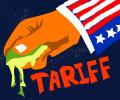
'If the near-term economic pain is absorbed more by those who have the ability and the financial strength to do so, then small and medium enterprises in downstream industries will emerge stronger from the trade imbroglio.'

'...as then it brings them closer to the complaints and grievances that the public faces.'

Global emerging market investors are sharply cutting back on India, making it the largest underweight market, as funds rotate into China, Hong Kong, and South Korea amid tariff shocks and valuation concerns.
India's initial public offering (IPO) market is rewriting the rules of sectoral dominance, with a diverse slate of companies entering the stock market arena.

The US' move to raise the tariff on most Indian goods to 50 per cent could drag India's GDP growth for FY26 by 35 to 60 basis points, according to various economists. One basis point (bp) is equal to 0.01 per cent.

'Sebi's measures are necessary to align the derivatives market with its underlying cash market, as the current disconnect is unsustainable.'

With inflation comfortably below the Reserve Bank of India's (RBI's) 4 per cent median target and likely to undershoot its 3.7 per cent projection for 2025-26 (FY26), there is room for the monetary policy easing cycle to be sustained, the Finance Ministry said on Monday. The comments, featured in the ministry's Monthly Economic Review for June 2025, assume significance ahead of the Monetary Policy Committee (MPC) meeting of the Reserve Bank of India (RBI) scheduled to begin from August 5.
'Listing of scaled Indian subsidiaries of multinational corporations as well as of Indian conglomerates continues to remain a key theme for IPOs in India.'

The Jane Street-Sebi saga is more than a legal dispute -- it's a litmus test for India's ambitions as a global financial hub.
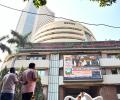
'BSE has facilitated nearly Rs 35 trillion in capital raising across multiple segments.'

'It is not rigidity.' 'I am just sticking to what I believe very strongly in, particularly if you have been given an opportunity to serve the country....'
Sebi aims to stay proactive as HFT and quant firms like Citadel Securities, Optiver, Millennium, and IMC Trading are expanding rapidly in India, which is home to the world's largest derivatives market by contracts traded.
 © 2026 Rediff.com - Advertise with us - Disclaimer - Privacy Policy - Sitemap - Feedback - About us - Terms of use - Grievances